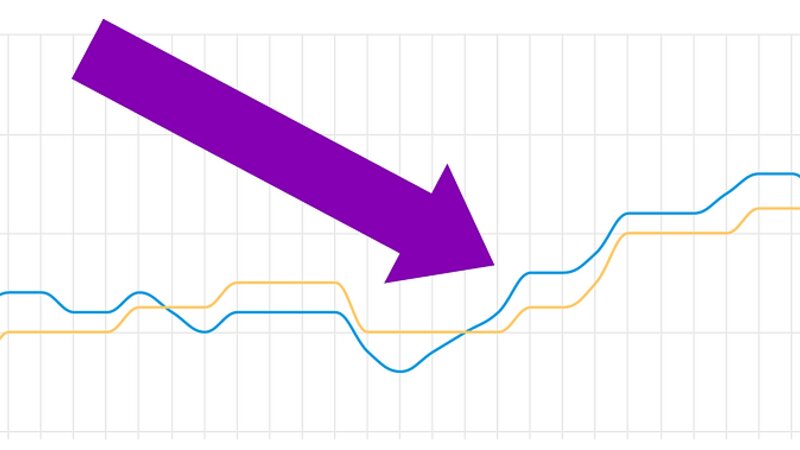
Contrary to what seems to be popular belief: links still move the needle.
They don't even have to be great links (I'm not saying they shouldn't be), I'm just saying they don't have to be.
But first a bit of background.
If you run through signal analysis from many of the trusted sources in SEO, you'll notice a link-based theme. Studies from MOZ, Backlinko, and SearchMetrics all reach the same data-backed conclusion: he who ranks in position 1 tends to have more links when analyzed across large populations of keywords and websites.
Backlinks to your website are still the number one driver of relevance and trust to Google.
Links Are All That Matter
Well, not exactly.
It's still critical to have your on-page SEO built out properly — clean HTML, fast load times, relevant information architecture, semantic and topically relevant content, etc. — but links are still really important.
Looking at the data from recent studies from MOZ, Backlinko, and SearchMetrics, the number of links, and more so number of linking root domains, is still the highest correlated signal to high organic rankings.
But it's not as simple as just getting more links to move the needle on competitive keywords and crack page one, because...
Not All Links Are Created Equal
Links from stronger (in terms of authority), more contextually relevant, and more trusted sites are going to make a bigger impact on moving your rankings — as well as new links from new domains.
And building links is hard, especially if you're going about it in the most sustainable way possible; by building things worth linking to.
Earning your links doesn't mean you're going to get the links you want — those sweet DA40+ links all coming from unique top-level domains — but it does mean you'll be developing a natural and clean link profile. In the age of Google's algorithm updates, this is a good move.
However, what if you want to move the needle faster? What if you wanted to explore some of the sites that are ranking with manufactured links?
Looking at Links in the Wild
There are lots of legitimate, white-hat ways to continue to build links. As for the less savory methods of engineering links, there's more or less 2 methods for manufacturing:
- Building or buying links on private blog networks (PBNs), or
- Going completely black-hat and injecting links into sites
The issue with both of these — beyond them being strictly against Google's guidelines — is that they both still work in many capacities, which I'm going to show you.
NOTE: All site names have been obfuscated. This is not an attempt to out anyone — I'm not the judge or the jury, I'm simply using these sites as examples.
Manufacturing Links on Owned or Controlled Websites
The first example is an Amazon affiliate site ranking for a nice chunk of commercial keywords — with high average CPCs for pure money terms (commercial investigation and transactional keywords). What makes this interesting is when you start to look at the actual quality of the sites linking to them.
The linking sites are all pretty common PBN-style sites — contextually relevant, with some decent content — and they're obviously moving the needle with rankings. The domain even shows signs that some previous PBNs have been deprecated, likely because the money site got hit by a penalty or the site got de-indexed.
These manufactured link profiles are generating significant commercial keyword value, demonstrating that PBNs — when executed with enough contextual relevance — still produce ranking results.
Manufacturing Links via Code Injection
Welcome to the dark part of the SEO world.
This is an area I'm personally completely against — it's scummy, it's messing with innocent people's and businesses' websites, and in many cases it's illegal (as it should be).
The second example is a very high domain authority website (over 80 DA) that makes its money from affiliate links. What's really interesting about their link profile is that they're using a mix of PBNs — many of which are affiliate sites themselves — and a large amount of injected links.
How Code Injection Works
Injected links work by maliciously inserting link code into a site's markup without any knowledge from the site's owner. Common methods include:
- Hiding links using a
<noscript>tag - Using in-line styles to "indent" the container by 9,999 pixels, making the link invisible to visitors but visible to crawlers
- Injecting entire sentences with multiple links on the homepage of high-traffic sites
Their entire link profile of just over 12 million links is packed with this kind of manipulation. And the domain authority of this site using all these spammy link tactics? Over 80.
Still think links aren't important?
How Much of a Difference Can These Links Make?
Significant. Sites using these techniques consistently show:
- 200+ top 3 rankings
- 900+ page 1 rankings
- Nearly 1,500 rankings on the first 2 pages of Google
Even when the PBN sites look obviously engineered and low-quality — they're working, for now.
What Can You Do?
That's a tough question.
You can put your nose to the audience and content research grindstone, hire some crazy expensive content production and/or marketing firm, and bust your ass to earn links. Which is honestly a good idea, but a really expensive one.
Then there's the old adage: if you can't beat 'em, join 'em.
The good news is it's no longer an all or nothing game — you can engineer the success of earning link placements, and you can do so from large, established, and trusted publishers. You just need the relationships, or at the very least, a path to the introductions. This is where experience goes a long way.
Looking for Real Links?
We've painstakingly built and refined a process for outreach that lands real, high authority links from publishers explicitly relevant to your website. High authority, high trust, contextual links proven to increase rankings — not manufactured garbage that puts your site at risk.
If you're serious about link building as a growth channel, let's talk about building it the right way.